
Fruit & Nut District
Fairhope's Fruit & Nut District
Where History, Coastal Charm, and Community Come Together
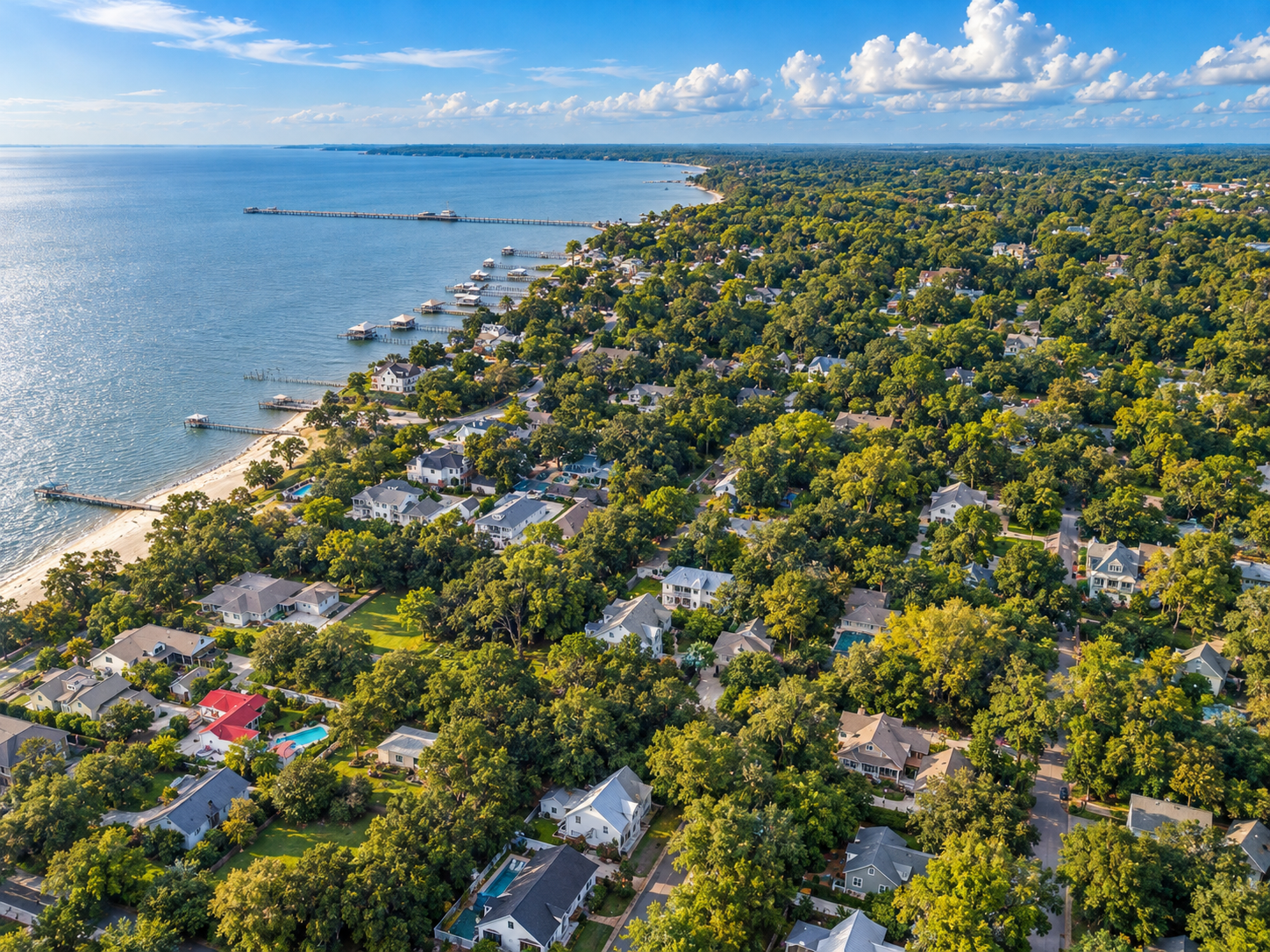
Tucked between downtown Fairhope and the shores of Mobile Bay is one of Alabama’s most distinctive residential neighborhoods: the Fruit & Nut District. The name is not an official subdivision designation with universally defined boundaries. Instead, it describes the historic residential neighborhood near downtown and the bay, with boundaries that can vary depending on whom you ask.
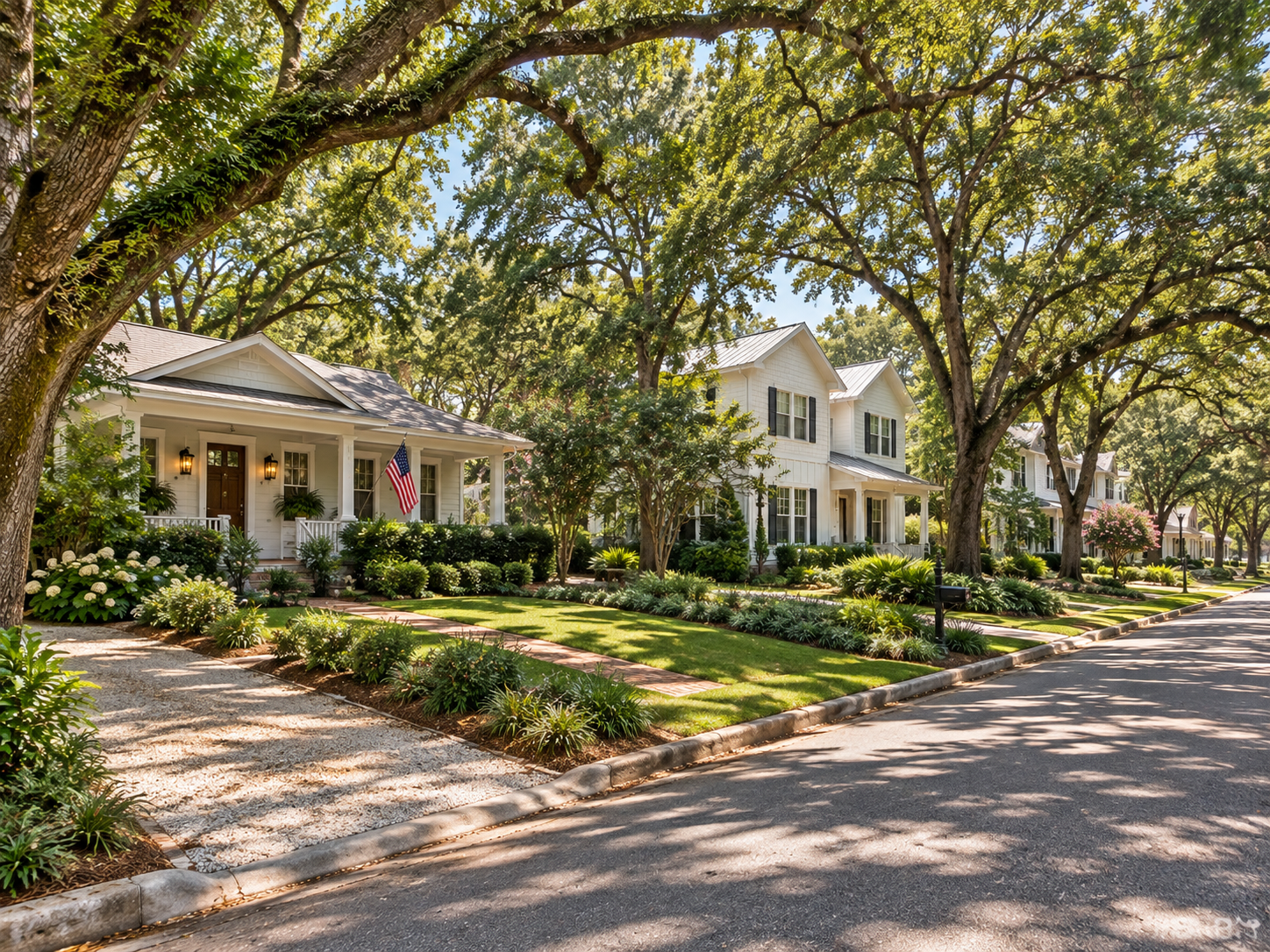
With its towering live oaks, winding sidewalks, historic cottages, colorful gardens, and inviting front porches, the Fruit & Nut District captures much of what people love about Fairhope.
But what makes this neighborhood special goes beyond its beautiful homes and desirable location. Its roots reach back to the earliest days of Fairhope, when a group of idealistic settlers envisioned a community built around shared opportunity, natural beauty, and a different way of living.
Today, that history remains part of the neighborhood's identity.
Why Is It Called the Fruit & Nut District?
The name comes from something wonderfully simple: the streets are named after fruits and nuts. You'll find streets with names like:
Fig Avenue
Orange Avenue
Pecan Avenue
Satsuma Street
Pomelo Street
The unusual naming tradition reflects the agricultural character of Baldwin County and its early association with fruit and citrus cultivation. Satsumas, in particular, became an important crop along Alabama's Gulf Coast during the late 1800s and early 1900s.
Over time, residents began referring to the area as the Fruit & Nut District, and the affectionate nickname stuck.
Featured Listings in Fruit & Nut District in Fairhope
A Bespoke Collection of Fruit & Nut District's Properties.


.
Why Do People Love Living in the Fruit & Nut District of Fairhope?
1. The Lifestyle Is Different
One of the biggest attractions of the Fruit & Nut District is its proximity to the places that make Fairhope special.
Imagine starting your morning with a stroll beneath the live oaks, stopping downtown for coffee, browsing a bookstore, and watching the sunset over Mobile Bay.
For many properties, those experiences are within walking or biking distance.
Residents enjoy convenient access to downtown restaurants, boutiques, art galleries, community events, parks, and the waterfront.
It's a neighborhood where the journey can be just as enjoyable as the destination.
2. No Two Homes Are Exactly Alike
Unlike neighborhoods where the houses follow a handful of floor plans, Fruit & Nut offers an appealing mix of architectural styles.
You might find a century old cottage beside a carefully renovated bungalow, a traditional Southern home across from a contemporary coastal residence, or a beautiful custom home tucked behind a canopy of mature trees.
Some properties feature inviting front porches, picket fences, and established gardens.
Others incorporate modern floor plans, outdoor entertaining areas, and luxurious finishes.
This architectural variety gives the neighborhood a distinctive personality. It's not a neighborhood built all at once. It's a neighborhood that has evolved over generations.
3. The Trees Are Part of the Experience
In Fruit & Nut, the landscape is just as important as the architecture. Towering live oaks, mature magnolias, lush gardens, and established landscaping contribute to the neighborhood's distinctive atmosphere.
The tree canopy provides shade during Alabama's warm summers and creates beautiful streetscapes throughout the year. Many residents value the sense of permanence that comes from living in an established neighborhood.
Instead of waiting decades for newly planted trees to mature, much of the landscaping already has a history of its own.
4. Mobile Bay Is Part of Everyday Life
The western edge of this part of Fairhope is defined by Mobile Bay. The waterfront offers one of the most compelling lifestyle benefits of living nearby.
Residents can enjoy shoreline walks, fishing, beautiful water views, and the spectacular sunsets for which Fairhope is known. The nearby Fairhope Municipal Pier, waterfront parks, and public green spaces are important parts of the community's appeal.
5. A Sense of Community
One of the characteristics people often associate with Fruit & Nut is its traditional neighborhood atmosphere. Front porches, sidewalks, established gardens, and relatively compact residential blocks encourage people to spend time outdoors.
Neighbors may see one another while walking their dogs, tending their gardens, or heading downtown. It's a neighborhood that appeals to people who value being connected to the surrounding community.
Of course, every street has its own personality, but the historic layout creates opportunities for the kind of everyday interactions that are harder to find in some newer suburban developments.
6. The Appeal of an Established Neighborhood
Fruit & Nut offers something that new construction communities cannot recreate: a neighborhood with more than a century of history behind it.
It's the relationship between the homes, streets, trees, gardens, and waterfront that has developed over time. Properties reflect different architectural eras, personal tastes, renovations, and changing lifestyles.
For buyers who appreciate character and individuality, that variety can be a significant advantage.
7. Living Close to Downtown Fairhope
Perhaps the greatest practical advantage is location. Downtown Fairhope is known for its locally owned shops, restaurants, art galleries, seasonal flowers, and community events.
Living nearby means residents may be able to enjoy these attractions without planning an entire outing around them.
A quick coffee, an evening stroll, dinner with friends, or an afternoon spent browsing local shops can become part of everyday life.
It's the ability to enjoy a neighborhood setting while remaining connected to the heart of Fairhope that makes the location especially appealing.
Is Fruit & Nut a Good Place to Buy a Home?
For buyers seeking a neighborhood with history, character, and proximity to downtown Fairhope, Fruit & Nut deserves consideration.
However, there are a few important realities.
The homes are not interchangeable. Age, condition, square footage, renovation quality, lot size, and exact location can make a substantial difference in value.
Not every property is within the same walking distance of downtown or the bay. The district's informal boundaries mean buyers should evaluate specific addresses rather than relying solely on a neighborhood label.
Older homes deserve careful inspections. Foundations, roofing, electrical systems, plumbing, drainage, and past renovations may require additional attention.
Ownership arrangements should be verified. Because of Fairhope's Single Tax history, buyers should determine whether a specific property involves fee simple ownership or a Single Tax Corporation leasehold. The neighborhood name alone doesn't establish the ownership structure.
These considerations don't diminish the area's appeal. They simply make knowledgeable local guidance especially valuable.
The Real Magic of the Fruit & Nut District
There are places where people buy homes because of the floor plan, the square footage, or the amenities. And then there are places where people fall in love with the neighborhood itself.
Fruit & Nut often inspires that kind of connection.
It might be the sunlight filtering through a century old oak tree.
The charm of a cottage surrounded by blooming flowers.
An evening stroll toward Mobile Bay.
The neighborhood has changed considerably since Fairhope's earliest days, but many of the qualities that attracted the town's founders remain central to its appeal.
Natural beauty. Community. Creativity. And a lifestyle connected to the water.
Fruit & Nut isn't simply a place to live. It's an opportunity to become part of Fairhope's continuing story